Pricing a home in Thousand Oaks requires a neighborhood-first approach, not a citywide one. Recent market data shows median sale prices ranging from roughly $825,000 in central areas to more than $1.7 million in estate pockets like Lynn Ranch, a spread of nearly $900,000 across the same city. The right list price is built on your specific micro-market, not the headline average.
Why Does the Thousand Oaks Market Vary So Much from One Neighborhood to the Next?
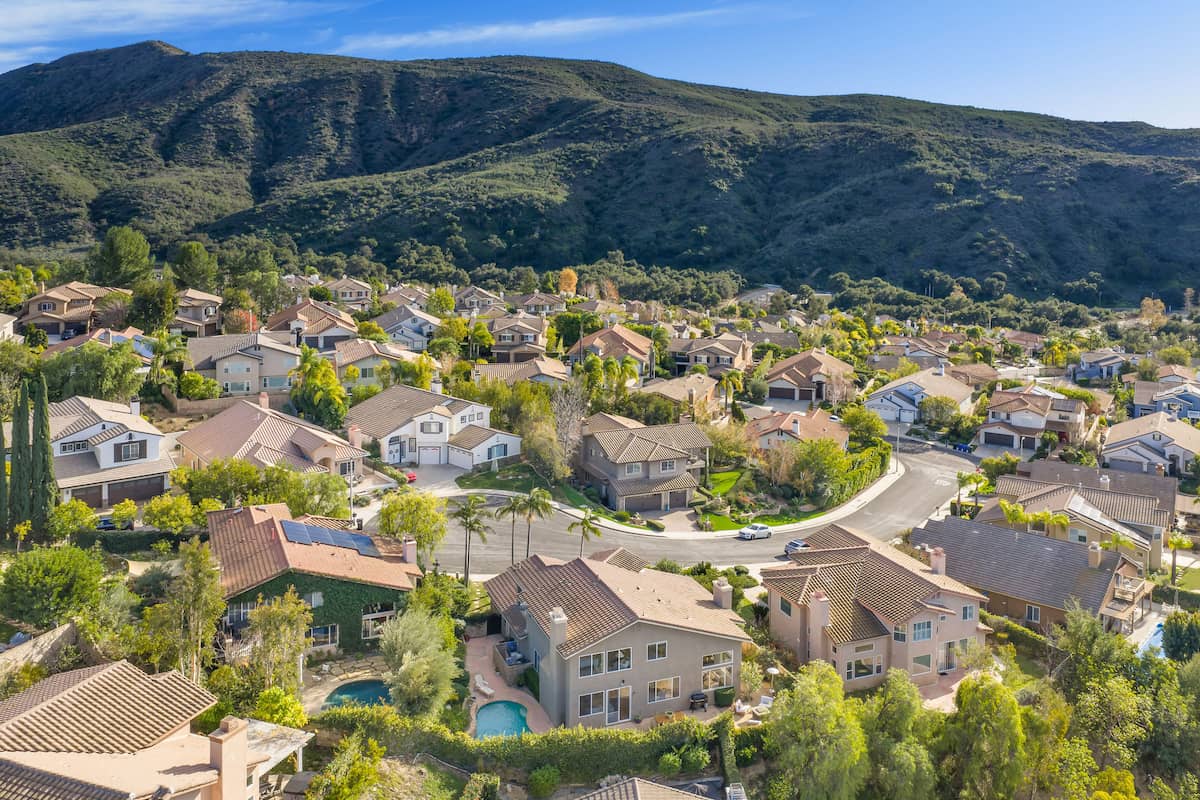
Thousand Oaks is not a single market. It is a collection of distinct residential settings: central neighborhoods, master-planned communities, guard-gated enclaves, and estate-style pockets. The city's planning framework identifies these subareas explicitly, and the variation shows up clearly in listing prices and market-time data.
What drives the differences is not just square footage. Usable lot size, grading, open-space adjacency, privacy, view orientation, and community type all affect how buyers evaluate a property. Two homes with comparable interior size can command very different results if one sits on a flat usable lot in a master-planned community with trail access and the other backs to a neighbor with a steep slope.
This is why pricing by citywide averages alone is a risk. The more specific your comparison set, the more defensible your list price becomes.
What Are Homes Actually Selling For in Thousand Oaks Right Now?
Recent market snapshots show a median sale price range of approximately $1.03 million to $1.11 million across the city, with homes taking roughly 40 days to sell. Many are closing at or slightly below list price.
Redfin's data shows a typical sale near 1% below list price. Zillow reports a median sale-to-list ratio of 0.996 and notes that more than half of recent sales closed below asking. Realtor.com places the ratio near 99%.
The takeaway: Thousand Oaks supports strong values, but premium pricing still has to be earned. A home that launches above where buyers perceive value tends to sit. The longer it sits, the more leverage shifts toward the buyer.
How Do Thousand Oaks Neighborhood Prices Compare?
The price spread across Thousand Oaks neighborhoods is substantial. Recent pocket-level data illustrates the range clearly.
Thousand Oaks Area | Recent Median Listing Price | Recent Median Days on Market |
|---|---|---|
Central Thousand Oaks | $824,999 | 57 days |
Lang Ranch | $1,275,000 | 32 days |
Rancho Conejo Village | $1,369,500 | 75 days |
North Ranch | $1,548,000 | 39 days |
Lynn Ranch | $1,714,500 | 43 days |
Dos Vientos | $1,730,000 | Premium pocket |
The spread between Central Thousand Oaks and Lynn Ranch alone exceeds $889,000 in these recent snapshots. That is a powerful reminder of why broad citywide averages are too blunt an instrument for a high-stakes pricing decision.
What Should Sellers in Central Thousand Oaks Know About Pricing?
Central Thousand Oaks is more price-sensitive in current market data. Realtor.com shows a median listing price of $824,999, with approximately 43 homes for sale and a median 57 days on market.
That longer timeline suggests buyers in this pocket respond more sharply to price and presentation. Sellers here may benefit from pairing a realistic list price with polished pre-listing preparation. Condition and cosmetic updates can play a meaningful role in how buyers respond when alternatives are readily available at a similar price point.
How Is Pricing Different in Lynn Ranch or North Ranch?
Lynn Ranch and North Ranch operate in a different pricing tier. Lynn Ranch shows a median listing price of $1,714,500 and 43 median days on market. North Ranch shows a median listing price of $1,548,000 with a 39-day average.
In these upper-tier pockets, scarcity and land characteristics carry more weight. Larger homes, larger lots, and estate-style settings can support stronger pricing. Even so, buyers in this range still compare privacy, lot utility, and property positioning carefully. The premium is earned by the full picture, not just the square footage.
Do Master-Planned Communities Like Lang Ranch and Dos Vientos Price Differently?
Master-planned communities attract a buyer who evaluates the setting alongside the home itself. Lang Ranch shows 34 homes for sale, a median list price of $1.275 million, a 32-day median market time, and a 100% sale-to-list ratio in recent data. That last number reflects the alignment buyers found between expectation and price.
Dos Vientos is also a master-planned community with open space, parks, ponds, trails, and neighborhood amenities, with a recent median listing price of $1.73 million. In communities like these, proximity to trails, parks, and lifestyle infrastructure is part of what buyers are pricing in.
Does a Gated Setting Guarantee a Faster Sale?
Not automatically. Rancho Conejo Village illustrates the point. It is a guard-gated enclave with approximately three homes for sale, a median listing price of $1,369,500, and a median market time of 75 days — the longest in these snapshots.
A gated address narrows the buyer pool and can create a desirability premium, but pricing still has to align with current buyer expectations and the available alternatives within that enclave. A gated setting positions a home; it does not replace pricing strategy.
How Do You Build a Defensible List Price in Thousand Oaks?
The strongest pricing strategy in Thousand Oaks is built on recent closed sales in the same micro-market, adjusted for the features buyers actually value in that specific location.
Key factors in a well-constructed Thousand Oaks pricing analysis include: recent closed sales in the same tract or immediate pocket, lot utility and usable outdoor space, privacy and adjacency to neighboring homes, view orientation or open-space setting, renovation level and overall presentation, community type (planned, gated, or estate), and current competition and days on market for comparable listings.
This approach protects against two common mistakes: pricing too high based on citywide headlines, and pricing too low without accounting for genuine property advantages.
The discipline behind that analysis matters as much as the number itself. At Michelle Price Realty Group, our approach to pricing is shaped by institutional-grade valuation methodology: a framework developed across more than 450,000 properties and $60 billion in value. In a nuanced market like Thousand Oaks, that level of analytical rigor helps us build a list price that is not just confident — it is defensible.
Does Presentation Affect How Well a Price Holds?
Pricing and presentation are not separate decisions. In more price-sensitive pockets, buyers comparing several similar homes at once respond to the one that feels aligned from the start — in price, condition, and overall positioning. A well-priced home in strong condition creates confidence. That confidence tends to attract more offers, faster, and at better terms.
In higher-end estate pockets, the story shifts slightly. Presentation still matters, but the narrative may center more on the lifestyle value of land, privacy, and setting. The marketing has to reflect what buyers at that price point are actually purchasing.
What Are the Signs That a Thousand Oaks Home Is Mispriced?
Even a strong home can miss the market if the pricing is not aligned with the current buyer pool. Early indicators of misalignment include: fewer showings than comparable listings, buyers who visit but do not make offers, feedback that consistently mentions price, nearby comparable homes that move faster, and a market time that extends beyond the typical range for that specific pocket.
In Thousand Oaks, some pockets move in the low 30-day range and others can stretch past 70 days. The benchmark that matters is your specific segment of the market, not the city average.
Frequently Asked Questions
How should a Thousand Oaks home seller set a list price?
The most reliable approach starts with recent closed sales in the same micro-market, then adjusts for lot utility, privacy, views, renovation level, and community type. A citywide median provides background context, but it should not be the primary input. The more specific the comparison set, the more defensible the list price.
Are Thousand Oaks homes selling over asking price right now?
Recent data from Redfin, Zillow, and Realtor.com suggests most Thousand Oaks homes are selling at or slightly below list price. Over-asking results do occur, particularly in well-priced homes with strong presentation in active pockets like Lang Ranch, but they are not the default outcome in the current market.
Why do Thousand Oaks neighborhoods have such different price ranges?
Thousand Oaks encompasses distinct residential settings with meaningfully different characteristics: usable lot size, grading, privacy, open-space adjacency, community type, and lifestyle amenities all affect value. Two homes with similar interior square footage may command very different results based on these factors alone.
What is the actual price difference between Central Thousand Oaks and Lynn Ranch?
Recent market snapshots show a median listing price of $824,999 in Central Thousand Oaks and $1,714,500 in Lynn Ranch, a spread of approximately $889,500. Both fall within the same city, which illustrates why citywide averages are rarely the right tool for individual property pricing.
Does presentation matter when pricing a Thousand Oaks home?
Yes, and the relationship runs in both directions. Strong presentation can support a price and reduce buyer objections. Weak presentation can undermine even a well-researched list price. In more price-sensitive pockets, the gap between a prepared home and an unprepared one often shows up directly in both price and market time.
How is pricing an estate-style home in Thousand Oaks different from pricing a standard tract home?
Estate-style properties — particularly in Lynn Ranch, North Ranch, and similar pockets — involve a more complex valuation because land characteristics, lot utility, privacy, and setting carry proportionally more weight. Square footage comparisons become less reliable as the primary driver, and buyer psychology at higher price points tends to favor homes where the full package is coherent and compelling.
Thinking About Selling in Thousand Oaks?
The neighborhoods within Thousand Oaks perform very differently from one another, and the difference between a well-positioned home and an over-ambitious one can show up clearly in both market time and final proceeds. A tailored pricing strategy — one built on your specific pocket, your property's genuine advantages, and a realistic read of current buyer behavior — can have a material impact on your outcome.
If you are considering selling and would welcome a thoughtful, data-informed perspective on where your home fits in today's Thousand Oaks market, I would be glad to have that conversation. I am easy to reach and always happy to make time.
Michelle Price
Michelle Price Realty Group
818.963.0269