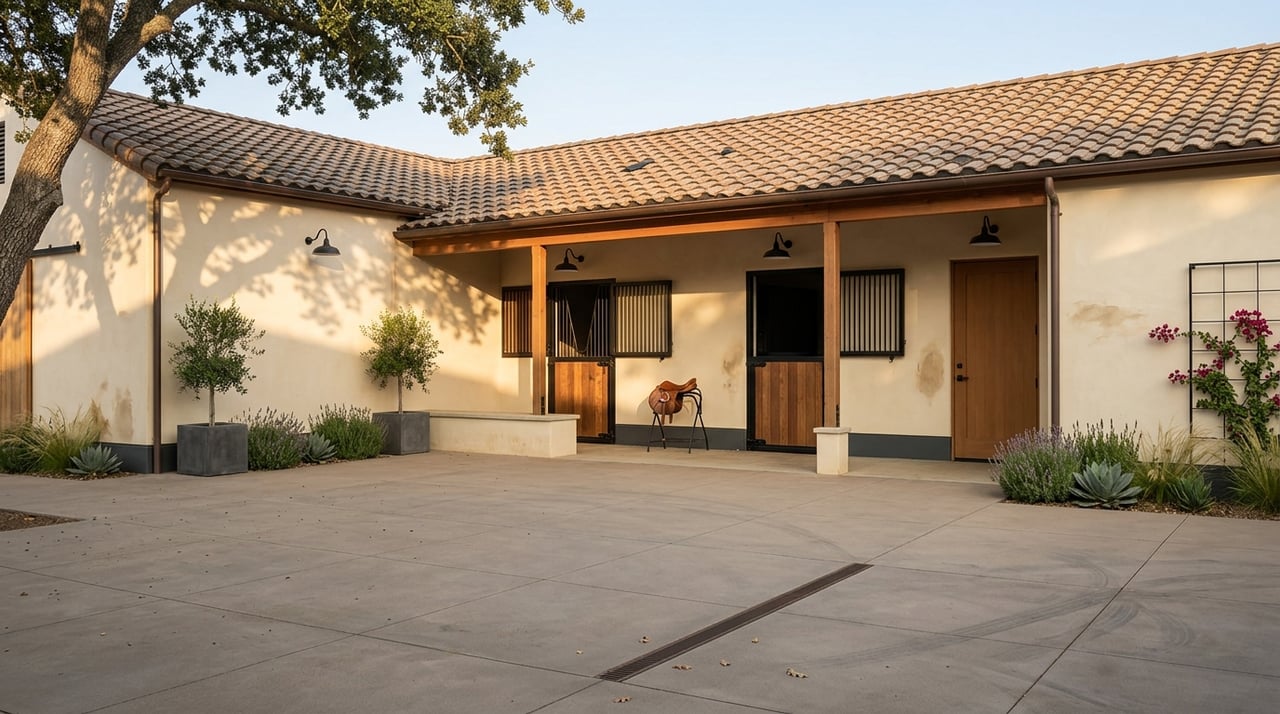
If you want space, privacy, and a daily rhythm shaped by land rather than traffic, Hidden Valley stands out in a rare way. This is the kind of place where estate living often includes room for horses, trail access nearby, and a quieter sense of separation from more built-up luxury neighborhoods. If you are exploring Hidden Valley as a buyer or simply trying to understand what makes it special, this guide will walk you through the equestrian estate lifestyle that defines the area. Let’s dive in.
Hidden Valley at a Glance
Hidden Valley is an unincorporated community in southeastern Ventura County, set within the Santa Monica Mountains. Ventura County describes it as an equestrian ranch community bordered by Lake Sherwood to the east, Newbury Park to the west and north, and the Santa Monica Mountains National Recreation Area to the south.
That setting helps explain the area’s appeal. You are close to established hubs like Westlake Village and Thousand Oaks, yet the landscape feels notably more private, rural, and estate-oriented than a typical suburban enclave.
Why Hidden Valley Feels Different
A big part of Hidden Valley’s identity comes from Ventura County’s planning framework for the Lake Sherwood and Hidden Valley area. The county’s area plan is designed to preserve existing land-use patterns, predominant lot sizes, and the area’s residential and recreational character.
In practical terms, that means Hidden Valley is shaped to remain land-focused. Instead of dense subdivision patterns, you see a more dispersed setting with larger parcels, open land, and a built environment that supports a ranch-style lifestyle.
Larger Parcels Create Breathing Room
The area plan includes Rural Residential designations with minimum parcel sizes from 2 to 10 acres, along with Open Space designations with 10 to 80 or more acres. The county states that these open-space areas are intended to preserve land while still allowing very low-density residential development and agriculture.
For you as a buyer, that planning context matters. It helps support the multi-acre properties, privacy buffers, barns, riding areas, and open views that people often associate with the Hidden Valley lifestyle.
Preservation Supports the Ranch Character
County policy for the area calls for maintaining pastoral character and encouraging agricultural and horse ranch operations in Hidden Valley. This gives the community a very different feel from many luxury markets where homes may be impressive, but the land itself plays a smaller role in everyday life.
Here, the property is often part of the lifestyle. Land stewardship, equestrian use, and a connection to the natural surroundings are built into the area’s long-term planning vision.
The Equestrian Estate Lifestyle
In Hidden Valley, equestrian living is not just a design theme or marketing phrase. It is supported by the area’s geography, planning, and surrounding recreation network.
If you picture mornings that begin with barn routines, space to accommodate horses on your own property, and riding opportunities beyond your gates, Hidden Valley aligns closely with that vision. The lifestyle feels grounded, private, and connected to the outdoors.
Room for Horse Facilities
Because the area is known for larger lots and low-density development, estate properties may have the physical space needed for equestrian improvements such as barns, riding areas, and trailer access. The county’s land-use framework is one of the reasons this remains possible here.
That does not mean every property is set up the same way. But compared with a conventional luxury neighborhood, Hidden Valley offers a stronger foundation for buyers seeking estate-scale land with equestrian potential.
A Daily Life Built Around Open Space
The Santa Monica Mountains National Recreation Area is one of the area’s strongest lifestyle assets. The National Park Service states that the recreation area offers more than 500 miles of public trails, many shared by hikers, mountain bikers, equestrians, and runners, with year-round recreation supported by the region’s mild Mediterranean climate.
For Hidden Valley residents, that means outdoor access is woven into the local setting. Trail riding and time outside are not occasional amenities. They are part of what makes the area function as a true landscape-first community.
Public Equestrian Amenities Nearby
Santa Rosa Valley Park adds another layer to the regional horse-friendly lifestyle. Ventura County Parks describes this 50-acre park as natural open space suitable for horseback riding, with two equestrian riding areas, a training area, horse-trailer-friendly parking, and trail access including Hill Canyon.
That matters because it shows the equestrian identity extends beyond private estates. The broader region also supports horses through public recreation infrastructure, which adds flexibility and convenience for riders.
Privacy and Seclusion Matter Here
One of Hidden Valley’s strongest draws is how private it feels. That sense of privacy is not accidental. It is reinforced by county policies that favor minimal alteration of scenic topography, underground utilities, and development that remains compatible with the surroundings.
For some new discretionary development, the county also calls for private road maintenance provisions, restricted access on Carlisle Road except emergency gates, and 24/7 private security requirements. Together, these policies help preserve the secluded, low-traffic character many estate buyers value.
Scenic Character Is Part of the Appeal
Luxury in Hidden Valley often feels quieter and more natural than in highly visible, amenity-packed communities. The visual experience is shaped by topography, open land, mature landscapes, and the spacing between homes.
If you are drawn to a setting where the land itself creates the first impression, Hidden Valley offers that in a meaningful way. The result is a refined but understated form of luxury.
A Rural Feel With Nearby Convenience
Even though Hidden Valley feels tucked away, it is still connected to the broader Conejo Valley. Ventura County groups Hidden Valley with nearby communities such as Westlake Village, Lake Sherwood, Thousand Oaks, and Oak Park within its District 2 service area.
That balance is part of the area’s appeal. You can enjoy a more rural, estate-style environment without feeling cut off from the services, dining, and day-to-day conveniences found in nearby hubs.
Close to Westlake Village and Thousand Oaks
Hidden Valley’s proximity to Westlake Village and Thousand Oaks gives residents practical access to regional amenities while preserving the neighborhood’s distinct identity. Ventura County Fire Station 33, for example, serves Hidden Valley and the southern reaches of the Westlake Village area of Thousand Oaks.
For you, that often translates into a lifestyle that feels private at home while still connected when you need errands, dining, or broader community services.
Club Access Adds to the Lifestyle
For buyers who value private social and recreational amenities, Sherwood Country Club is a notable nearby anchor. The club describes itself as a private member-owned club founded in 1989, offering golf, tennis, dining, and social opportunities in Thousand Oaks.
While Hidden Valley is not defined by one club alone, proximity to this type of private amenity adds another layer to the overall lifestyle. It reinforces the area’s mix of estate privacy, outdoor living, and access to refined leisure options nearby.
What Buyers Should Notice in Hidden Valley
If you are considering a Hidden Valley equestrian estate, it helps to look beyond square footage alone. In this market, the land plan and lifestyle fit are often just as important as the home itself.
Here are a few features worth paying close attention to:
- Parcel size and usable land
- Existing equestrian improvements
- Access points for trailers and service vehicles
- Relationship to nearby trails and open space
- Privacy from roads and neighboring properties
- Topography and how it affects daily use
- Overall compatibility between the home, the land, and your intended lifestyle
A property may look impressive online, but Hidden Valley is best understood through how the estate functions on the ground. The experience of space, seclusion, and usability is often what defines long-term value here.
Why Hidden Valley Appeals to Luxury Buyers
Hidden Valley offers something that can be hard to find in Southern California luxury real estate: a genuine sense of retreat paired with proximity to established community amenities. It is not trying to feel urban, resort-like, or densely curated.
Instead, it offers a more grounded version of luxury. The combination of acreage, equestrian potential, scenic protection, open-space access, and nearby club life creates a distinct lifestyle for buyers who want room to breathe.
Hidden Valley Through a Local Lens
For buyers and sellers alike, Hidden Valley is best approached as a specialized micro-market. Estate properties here are often lifestyle assets first, with value shaped by privacy, land, usability, and setting as much as by finishes or bedroom count.
That is why local guidance matters. Understanding how a parcel lives, how it fits the area’s planning context, and how to position or evaluate an equestrian estate requires a more tailored approach than a standard neighborhood home search.
If you are considering buying or selling in Hidden Valley, working with a team that understands estate-scale property, presentation, and privacy can make the process more strategic from the start. To learn more or begin a confidential conversation, connect with Michelle Price Realty Group.
FAQs
What is Hidden Valley in Ventura County known for?
- Hidden Valley is known as an equestrian ranch community with larger parcels, rural residential character, open-space surroundings, and close proximity to Lake Sherwood, Westlake Village, and Thousand Oaks.
What makes the Hidden Valley equestrian estate lifestyle unique?
- The lifestyle is shaped by multi-acre properties, support for horse ranch operations, nearby public equestrian amenities, and access to a broad trail network in the Santa Monica Mountains.
Are there horse-friendly recreation options near Hidden Valley?
- Yes. The surrounding region includes shared-use trails in the Santa Monica Mountains National Recreation Area and equestrian facilities at Santa Rosa Valley Park.
Is Hidden Valley close to Westlake Village and Thousand Oaks?
- Yes. Hidden Valley is near both Westlake Village and Thousand Oaks, giving residents access to regional services and amenities while maintaining a more private, low-density setting.
Why do luxury buyers consider Hidden Valley properties?
- Buyers are often drawn to Hidden Valley for acreage, privacy, equestrian potential, scenic character, and the balance between rural estate living and access to nearby social and recreational amenities.